Choosing between endoscopic and open spine surgery depends on the nerve compression, spinal stability and operation you actually need—not simply on incision size or where you live. By the end, you will know how the two techniques differ, which diagnoses may fit an endoscopic approach, what recovery involves and which questions to ask a spine surgeon before consenting.
Key takeaways
- Endoscopy uses a camera through a narrow route; open surgery provides wider spinal exposure.
- Ask whether your diagnosis suits a transforaminal, interlaminar, or open approach.
- A small incision does not remove risks or guarantee faster recovery.
- Compare the surgeon’s diagnosis, approach, complication plan, and follow-up care.
Endoscopic and open spine surgery: what changes in the operation?
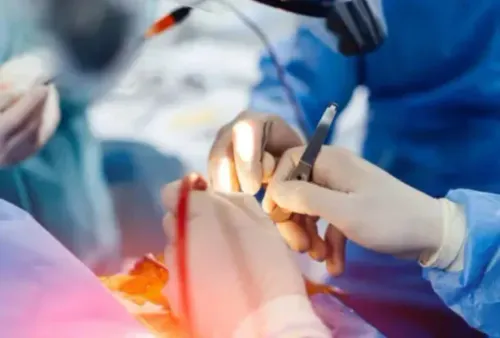
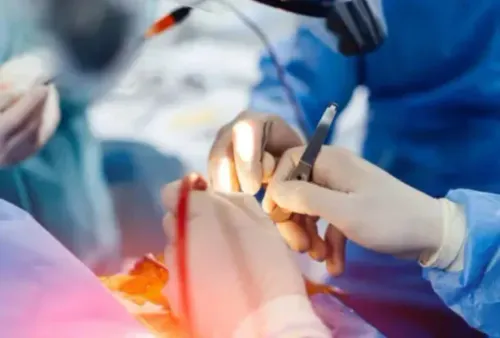
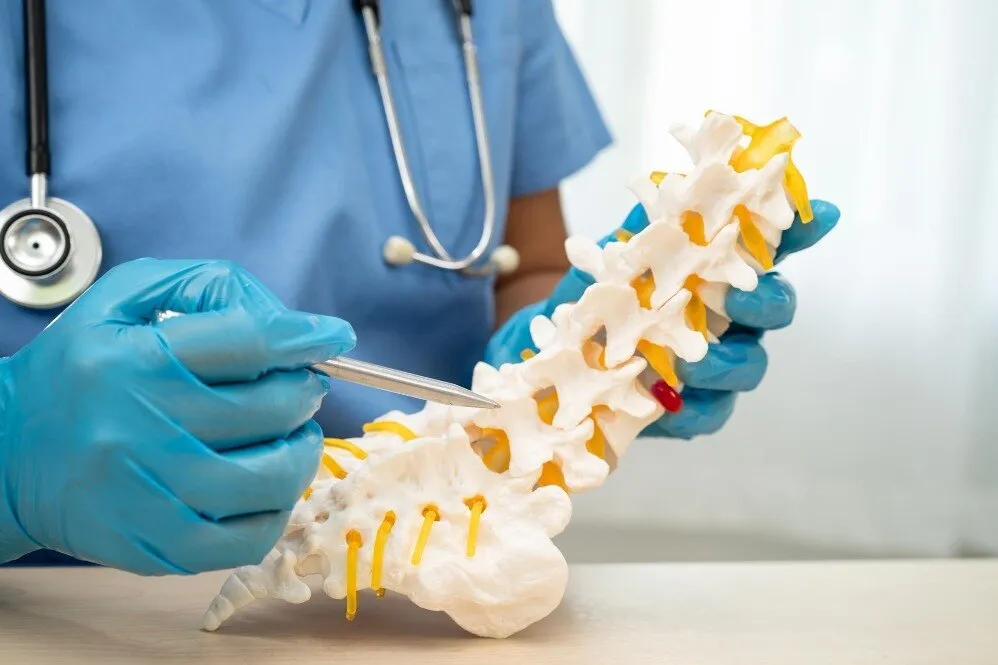
Endoscopic spine surgery uses a camera and instruments through a working channel, usually through a transforaminal or interlaminar route. Open spine surgery uses a larger incision and wider exposure, with muscle retraction and direct access to the spine.
| Approach | Endoscopic spine surgery | Open spine surgery |
|---|---|---|
| Access | Small skin incision; imaging guides the channel to the target | Larger incision exposes the affected vertebrae and nerve |
| Tissue disruption | Less muscle dissection, blood loss and early wound pain | More muscle and soft-tissue dissection; often greater blood loss |
| Visualisation | Magnified camera view through a narrow field | Direct, wider field for several levels, bone removal or deformity correction |
| Instrumentation | Limited access; suitable instruments pass through the channel | Allows decompression, screws, rods, cages and fusion when required |
| Hospital stay | Often same-day or shorter admission when recovery is uncomplicated | Often longer admission, depending on decompression, fusion and medical needs |
| Recovery and scar | Smaller scar and earlier movement for some patients | Larger scar and slower muscle recovery, particularly after fusion |
| Risks | Residual or recurrent disc, inadequate decompression, dural tear, nerve injury, infection or dysesthesia | The same core risks, plus greater tissue injury and wound discomfort |
A smaller incision does not guarantee better long-term pain relief or a safer operation. Endoscopy can use local anaesthesia with sedation in selected cases, but general anaesthesia remains common. Open surgery is valuable for extensive stenosis, instability, deformity, tumour, fracture or multilevel treatment, and an endoscopic procedure may still require conversion or later revision.
How spinal endoscopy reaches the compressed nerve
A typical endoscopic spine surgery procedure places you face down while the surgeon uses X-ray guidance to target the affected lumbar level. After local anaesthesia with sedation or general anaesthesia, a small skin incision admits a guidewire, dilators and a working channel.
A camera sends magnified images to a monitor while instruments remove disc material, bone or thickened ligament around the nerve. Saline irrigation keeps the view clear.
The route determines which part of the nerve canal the surgeon can reach:
| Approach | Entry route | Typical use |
|---|---|---|
| Transforaminal | Through the neural foramen beside the exiting nerve root | Foraminal or extraforaminal disc herniation and selected foraminal stenosis |
| Interlaminar | Between the laminae at the back of the spinal canal | Central or lateral-recess compression, especially at L4–L5 or L5–S1 |
| Percutaneous endoscopic lumbar discectomy | A needle-sized access technique for removing a lumbar disc fragment; it may use either route | Selected contained or sequestered lumbar disc herniation causing leg pain |
Transforaminal access avoids passing through the spinal canal but can be difficult at certain levels, particularly where the iliac crest blocks the path. Interlaminar access gives a direct view of the canal but requires a suitable gap between the laminae.
The operation is not risk-free: residual or recurrent disc, inadequate decompression, dural tear, nerve injury, infection, bleeding and postoperative dysesthesia can require revision or conversion to open surgery.
Which diagnoses fit endoscopy, and which need another approach?
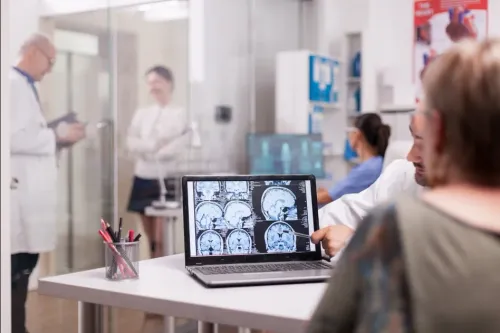
Endoscopy fits when MRI shows one focal nerve-compression problem that matches your leg pain, numbness or weakness, and the spine remains stable. A contained lumbar disc herniation, selected foraminal stenosis and selected lateral-recess compression can suit a targeted decompression when the surgeon can reach the fragment or narrowing without major reconstruction.
| Finding | Endoscopic option | When another approach fits better |
|---|---|---|
| Contained disc herniation | Remove the offending disc material through a working channel | Large, migrated or calcified fragments that cannot be safely reached |
| Foraminal or lateral-recess stenosis | Enlarge the nerve’s passage at one focal level | Compression requiring extensive bone removal or several levels |
| Stable lumbar segment | Decompression without implants | Instability requiring screws, rods or fusion |
Endoscopy is usually the wrong tool when the operation must correct the whole spinal structure rather than free one nerve. Choose an open or other approach for:
- Severe instability, major deformity or vertebral fracture
- Extensive or multilevel stenosis needing broad bone or ligament removal
- Infection or a spinal tumour requiring biopsy, removal or reconstruction
- Significant disc collapse where decompression alone would worsen instability
The decisive evidence is the examination, MRI or CT findings, proposed level and required operation—not a search label such as minimally invasive spine surgery worli.
Ask whether the plan is decompression or fusion, what happens if the view is inadequate, and whether the facility can manage a dural tear, residual compression or conversion to open surgery.
Recovery, complications and the limits of a small incision
A smaller incision can reduce muscle dissection, blood loss and early pain, but it does not guarantee a quicker or safer recovery. Endoscopic spine surgery still carries risks of residual or recurrent disc herniation, inadequate decompression, dural tear, nerve-root injury, infection, bleeding, postoperative dysesthesia and revision or conversion to open spine surgery.
| Recovery point | Endoscopic spine surgery | Open spine surgery |
|---|---|---|
| Pain | Often less wound and muscle pain initially; nerve pain can persist | More muscle and wound soreness early on |
| Walking | Many patients walk the day of surgery or the next day | Walking begins early, but distance may increase more slowly |
| Desk work | Commonly within several days to two weeks, depending on pain and procedure | Often takes longer, especially after decompression or fusion |
| Driving | Wait until you are off opioid pain medicine, can sit comfortably and can brake hard without hesitation | The same safety rule applies |
| Physiotherapy | Walking and prescribed exercises start when cleared; formal therapy depends on weakness and surgery | The programme may be longer or more structured |
| Lifting | Follow the surgeon’s limit; avoid bending, twisting and heavy loads until healing is confirmed | Restrictions are often stricter after fusion and remain surgeon-specific |
These are planning ranges, not promises. A technically difficult endoscopic operation, a dural tear or incomplete decompression can erase its early advantage, while a well-selected open operation can provide more complete treatment. Ask when you may lift, return to work and drive; do not infer those dates from incision length.
Progressive leg weakness, saddle numbness or new bladder or bowel loss requires urgent assessment.
Questions to ask before choosing a spine surgeon in Worli
A written plan should name the diagnosis, spinal level, side, approach, and intended result. The phrase endoscopic spine surgery for Worli describes a location-based search, not a quality standard; spine surgeon Worli does not prove experience.
Ask the surgeon:
- Why is this level causing my symptoms, and what will the operation remove?
- What is the alternative: endoscopic decompression, open decompression, or fusion?
- How many operations of this exact type and level have you performed in the past year?
- What are your conversion, incomplete-decompression, recurrent-disc and reoperation rates?
- If the nerve cannot be reached safely, will you convert during the same anaesthetic?
- Who will perform the anaesthesia, and can the hospital manage a dural tear, bleeding, nerve injury or emergency reoperation?
Endoscopy is not automatically the better choice. Compare the actual objective and trade-offs:
| Option | Main advantage | Important limitation |
|---|---|---|
| Endoscopic decompression | Smaller access corridor and less muscle disruption | Narrower working field; incomplete decompression or conversion can occur |
| Open decompression | Wider view for extensive bone or ligament removal | More tissue dissection and early postoperative pain |
| Fusion with decompression | Stabilises proven instability or deformity | Implants, longer recovery and risks such as non-union or adjacent-level disease |
Confirm that the hospital has a spine implant inventory, advanced imaging, intensive-care support, blood bank access and a surgeon available for revision or conversion. Dr. Anshu Warade can help a patient assess whether the proposed target and technique match the imaging and symptoms, rather than choosing by incision size alone.
Frequently asked questions
What changes between endoscopic and open spine surgery?
Endoscopic surgery uses a camera and instruments through a working channel, usually via a transforaminal or interlaminar route. Open spine surgery uses a larger incision, muscle retraction, and wider direct exposure.
How does spinal endoscopy reach a compressed nerve?
The surgeon advances the endoscope through a transforaminal or interlaminar route, then uses instruments through the working channel to access the affected area and relieve pressure on the nerve.
Which diagnoses fit endoscopic spine surgery?
The suitable approach depends on the location and cause of nerve compression, the spinal level, stability, and the operation required. Some conditions need wider exposure or another technique.
Does a smaller incision guarantee an easier recovery?
No. A small incision does not eliminate surgical risks or guarantee rapid recovery. Recovery depends on the diagnosis, procedure, nerve condition, general health, and postoperative plan.
What should you ask a spine surgeon in Worli?
Ask for the exact diagnosis, proposed approach, reason for choosing endoscopic or open surgery, expected benefits, risks, alternatives, recovery restrictions, and follow-up schedule.
Keywords