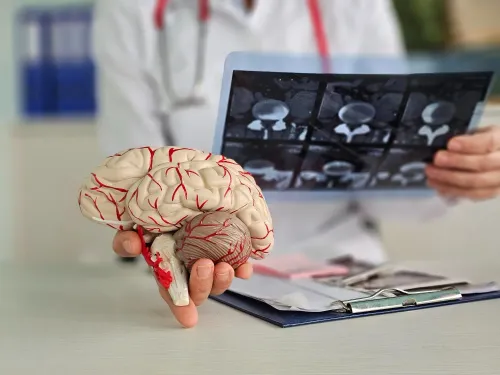

These operations address different parts of the nervous system, pursue different goals and carry different recovery concerns, so a smaller incision cannot decide which one a child needs. By comparing the anatomy, indications, investigations, risks and aftercare, you can ask more useful questions before agreeing to observation, endoscopic treatment or open surgery.
Key takeaways
- Spine endoscopy targets selected spinal levels; brain surgery addresses intracranial conditions.
- Ask whether observation, medication, endoscopy, or open surgery best fits your child’s diagnosis.
- Seek urgent assessment for worsening weakness, seizures, reduced consciousness, or breathing problems.
- Compare hospital stay, activity limits, wound care, and follow-up before consenting.
Why endoscopic spine surgery and brain surgery are not interchangeable
Endoscopic spine surgery and brain surgery address different anatomy. Endoscopic spine surgery uses narrow portals to reach a selected lumbar, thoracic or cervical level, where the goal may be relieving nerve or spinal-cord compression or removing a lesion.
A cranial operation works inside the skull, so it cannot substitute for treatment of a tethered cord or spinal tumor.
A search for endoscopic spine surgery compared with brain surgery children santacruz describes a location-based question, not one operation. The target anatomy, diagnosis and desired outcome matter more than the word endoscopic.
| Procedure | Target | Examples of purpose |
|---|---|---|
| Endoscopic spine surgery | Lumbar, thoracic or cervical spine | Decompression or selected lesion removal |
| Cranial surgery | Brain, ventricles or skull | Tumor biopsy or removal, epilepsy surgery, vascular-malformation treatment, shunt placement or endoscopic third ventriculostomy |
A pediatric endoscopic surgery comparison is useful only after identifying the diagnosis. If your child has weakness, loss of walking, new bladder or bowel dysfunction, repeated vomiting, severe headache, a seizure, unusual sleepiness or rapidly increasing head size, seek medical assessment instead of routine comparison-shopping.
What pediatric endoscopic spine surgery involves—and when it may be unsuitable
An endoscopic spine procedure treats a precisely selected spinal level identified on MRI. Through a small skin incision, the surgeon places a working portal, camera, irrigation channel and slender instruments to remove a lesion or decompress a nerve root or spinal cord. The aim is relief of compression, not simply a smaller scar.
| Approach | What happens | Why it may be chosen |
|---|---|---|
| Endoscopic | Camera and instruments pass through a portal at the MRI-defined level | Limited, accessible compression or lesion |
| Open | A wider exposure allows broader access and reconstruction | Large tumour, deformity, infection or severe cord compression |
Tethered cord or spinal dysraphism can produce progressive leg weakness, altered gait, pain or bladder dysfunction. Tumours, syringomyelia and nerve compression can cause focal weakness, sensory change or worsening back pain. A search for endoscopic spine surgery santacruz or pediatric endoscopic surgery comparison should focus on the child’s anatomy and symptoms, not the incision size.
Children receive this approach selectively. Spinal growth, congenital anatomy, deformity, infection, tumour size, bleeding risk or spinal-cord compression can make open surgery safer or more effective. A small incision still carries risks of nerve-root, dural or cord injury, cerebrospinal-fluid leakage, residual compression and conversion to an open operation.
Which childhood brain conditions require surgery, and how urgent is the decision?
Urgency depends on the condition, pressure inside the skull and the child’s neurological state—not on whether an endoscope is used.
| Condition | Typical operation | Usual urgency |
|---|---|---|
| Hydrocephalus | ETV or cerebrospinal-fluid shunt | Emergency if pressure is rising; planned if stable |
| Brain tumour | Biopsy, maximal safe removal or decompression | Urgent when pressure, bleeding or decline develops; otherwise planned |
| Epilepsy-related lesion | Lesion removal or seizure-focused surgery | Planned, unless seizures are uncontrolled |
| Vascular malformation | Resection, embolisation or radiosurgery | Urgent after acute bleeding; otherwise planned |
| Craniosynostosis | Skull remodelling or expansion | Planned, with timing based on age and pressure |
An endoscopic third ventriculostomy creates an opening in the floor of the third ventricle, allowing cerebrospinal fluid to bypass selected obstructive hydrocephalus. It is not a universal replacement for a shunt; cause, age, previous treatment and ventricular anatomy determine suitability.
ETV can fail early or later, so families need instructions for urgent review if vomiting, severe headache, unusual sleepiness, worsening vision or reduced consciousness returns.
Acute bleeding, deteriorating consciousness, uncontrolled seizures or raised intracranial pressure require emergency assessment. Tumour surgery may seek tissue diagnosis, decompression or maximal safe removal. Complete removal is not automatically better if it risks movement, speech, vision, memory or behaviour.
A pediatric endoscopic surgery comparison should focus on anatomy and purpose, not the label. That principle guides brain surgery for children santacruz families researching.
How doctors choose between observation, medication, endoscopy and open surgery
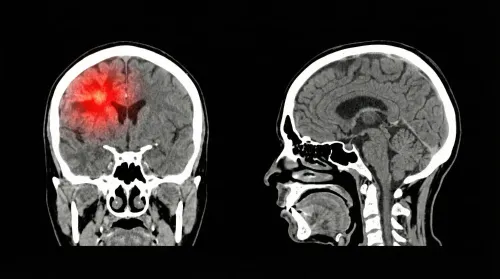
Doctors choose treatment after identifying the child’s anatomy, symptoms and neurological risk. The work-up includes an age-appropriate neurological examination and MRI of the brain or spine. Add gadolinium contrast when assessing a tumor, infection, vascular lesion or tissue boundary; use CT when bone detail matters, including craniosynostosis or surgical planning.
| Option | What it means | When it applies |
|---|---|---|
| Observation | Monitor symptoms and repeat imaging | Stable finding without progressive deficit |
| Medication | Treat pain, seizures, inflammation or pressure-related symptoms | Symptoms are controllable and no urgent structural correction is needed |
| Endoscopy | Reach a selected area through a narrow corridor | Anatomy permits safe decompression, drainage or lesion treatment |
| Open surgery | Expose the target directly | Large lesion, deformity, bleeding risk, severe compression or complex congenital anatomy makes wider access safer |
Ask: What structure is compressed or blocked? Is the finding causing the symptoms? Which spinal level or brain region is involved? What change on repeat imaging would trigger surgery? Age, weight, development, spinal growth, skull development and congenital anatomy affect the balance.
Progressive weakness, impaired learning, seizures, continence problems or declining mobility raise the cost of waiting. That is why endoscopic spine surgery compared with brain surgery for children in Santacruz requires diagnosis-specific planning, not a smaller-incision promise; brain surgery for children in Santacruz is not automatically the better or more urgent choice.
What recovery differences should families expect after spine and cranial procedures?
Recovery is determined by the operation and the child’s age, not by incision size alone. A pediatric endoscopic surgery comparison must account for airway control, temperature, fluids and pain medicines in infants and young children; never transfer an adult endoscopic-spine pathway to a child.
| Procedure | Position and access | Operating time and monitoring |
|---|---|---|
| Spine | Prone or side-lying; a small back or neck incision admits the camera and instruments to one spinal level. | Often shorter, but complex lesions take longer; ward observation may be enough, while cord compression or major blood loss may require intensive care. |
| Cranial | Head fixation or another position exposes the skull; the incision is on the scalp, with a burr hole or craniotomy, or an endoscopic ventricular route. | Duration varies widely; ward or intensive-care monitoring depends on swelling, bleeding risk, hydrocephalus and neurological status. |
After spine surgery, protect the wound, control pain and follow restrictions on bending, lifting, sports and school attendance. After cranial surgery, watch for seizures, bleeding, swelling, stroke, hydrocephalus, infection, or changes in speech, vision, movement and behavior. Progress activity only as instructed, return to school gradually, and attend MRI or neurological follow-up.
The endoscopic spine surgery Santacruz pathway still requires an operation-specific plan. Ask about wound care, warning signs, expected milestones and whether the child needs overnight or intensive-care observation.
Questions to ask a pediatric neurosurgeon in Santacruz
The right specialist can explain the diagnosis, evidence and trade-offs without selling the smallest incision. Use this checklist when comparing recommendations:
- What is the exact diagnosis, and which MRI or CT finding proves it?
- What neurological examination findings match the scan?
- What access route is proposed, and why does it suit this child’s age, size and anatomy?
- What benefit is expected, and what alternatives include observation, medication or open surgery?
- What could happen if treatment waits?
- How likely is conversion to, or later need for, an open operation?
- Will the child need intensive-care monitoring, and for how long?
- What are the milestones for pain control, walking, bladder function, school and sports?
- How many children with this diagnosis and procedure has the surgeon treated?
| Compare | Ask for evidence | What it prevents |
|---|---|---|
| Pediatric expertise | Experience with congenital disorders, developing nervous systems and age-specific anesthesia | Applying an adult pathway to a child |
| Endoscopic spine surgery Santacruz | Why a portal is safer or more effective than open access | Choosing incision size over outcome |
| Brain surgery for children Santacruz | The cranial target, goal and recovery risks | Treating different anatomy as one procedure |
Children’s long-term growth, learning, continence and function matter. A second opinion is sensible for elective surgery or when “smaller incision” is the main argument. Dr. Anshu Warade can join that discussion, focused on examination and imaging. Santacruz identifies location, not a separate indication.
Related services
Pediatric Neurosurgery 🧠 Pediatric Neurosurgery by Dr. Anshu Warade Pediatric Neurosurgery focuses on diagnosing and treating brain, spine, and nerve conditions in... View service → |
Brain (Cranial) Surgeries 🧠 Brain (Cranial) Surgeries by Dr. Anshu Warade Brain (Cranial) Surgeries involve advanced surgical procedures to treat conditions affecting the... View service → |
Frequently asked questions
Are endoscopic spine surgery and brain surgery interchangeable for children?
No. Endoscopic spine surgery reaches selected cervical, thoracic, or lumbar spinal levels, while brain surgery treats conditions inside the skull. The anatomy, risks, imaging, and surgical approach differ.
When might pediatric endoscopic spine surgery be unsuitable?
It may be unsuitable when the lesion is inaccessible through a narrow corridor, the spine is unstable, extensive decompression is needed, or the child’s anatomy and diagnosis favour another approach.
Which childhood brain conditions can require surgery?
Surgery can be considered for conditions such as hydrocephalus, brain tumours, vascular malformations, medication-resistant epilepsy, craniosynostosis, and selected congenital abnormalities.
How do doctors choose between observation, medication, endoscopy, and open surgery?
They assess the diagnosis, symptoms, neurological examination, MRI or CT findings, growth, progression, procedural risks, and the expected benefit of each option.
How does recovery differ after spinal and cranial procedures?
Recovery depends on the operation and diagnosis. Families should compare pain control, neurological monitoring, hospital stay, wound care, activity restrictions, rehabilitation, and follow-up requirements.
Related service
Endoscopic Brain Surgery 🧠 Endoscopic Brain Surgery by Dr. Anshu Warade Endoscopic Brain Surgery is an advanced, minimally invasive neurosurgical technique that uses a thin... View service → |
Keywords