A blocked artery, a brain haemorrhage, a ruptured aneurysm and dangerous swelling require different treatments, and the first CT scan often determines which pathway begins. You will be able to compare medication, catheter-based treatment and open surgery, then identify the imaging findings, timing and hospital capabilities that affect care in Dadar.
Key takeaways
- Get CT or MRI imaging before treatment decisions.
- Blocked arteries and brain bleeding require different procedures.
- Ask whether thrombectomy, decompression or aneurysm repair is indicated.
- Confirm 24-hour imaging, neurosurgical cover and transfer arrangements.
The scan-first pathway: identifying the stroke mechanism
A sudden neurological deficit or severe headache requires emergency imaging, not a choice between elective stroke treatment options Dadar. Doctors first determine whether an artery is blocked or a blood vessel has ruptured, because clot-dissolving medication can worsen active bleeding.
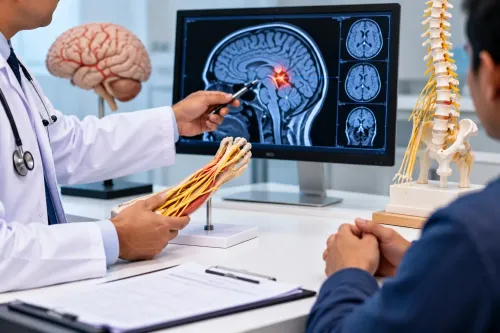
A non-contrast CT scan is usually performed immediately because it detects blood and major swelling quickly.
- Non-contrast CT: Confirms or excludes intracerebral or subarachnoid haemorrhage and shows established brain injury.
- CT angiography: Maps blocked large arteries, aneurysms and other abnormal vessels that could require catheter treatment or surgery.
- CT perfusion or MRI: In selected patients, shows salvageable brain tissue and helps assess treatment beyond standard time windows.
If the scan shows ischaemic stroke, clinicians assess intravenous alteplase or tenecteplase, then urgently evaluate mechanical thrombectomy for a suitable internal carotid or proximal middle cerebral artery blockage. Thrombolysis is medication, not brain surgery, and thrombectomy assessment should continue even while alteplase is working.
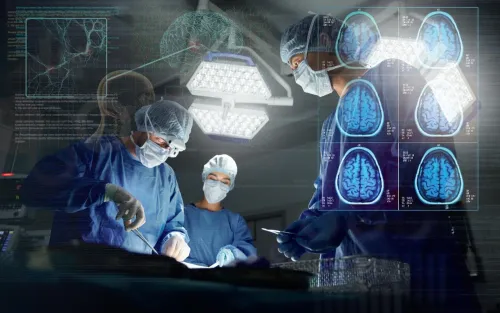
Bleeding changes the priorities. Teams control blood pressure, reverse anticoagulant effects when needed, monitor intracranial pressure and look for hydrocephalus. Craniotomy for clot evacuation, aneurysm coiling or clipping, external ventricular drainage, or decompressive surgery depends on bleed location and volume, neurological decline, hydrocephalus, age and previous function.
A Dadar facility that performs CT may still need rapid ambulance transfer for thrombectomy, aneurysm treatment, neurosurgery or neuro-ICU care.
Ischaemic stroke: thrombolysis, thrombectomy and decompression
Thrombolysis and thrombectomy treat a blocked artery; decompressive hemicraniectomy treats dangerous swelling after an established infarction. A non-contrast CT first excludes bleeding, while CT angiography identifies an internal-carotid or proximal middle-cerebral-artery blockage.
| Treatment | What it does | When it applies |
|---|---|---|
| Intravenous thrombolysis | Alteplase or tenecteplase dissolves clot through medication, not brain surgery | Eligible patients within the applicable time window after symptom onset |
| Mechanical thrombectomy | A catheter retrieves the clot from the artery | Selected large-vessel occlusions, performed urgently and sometimes up to 24 hours with advanced-imaging selection |
| Decompressive hemicraniectomy | Removes part of the skull to give swollen brain room | Malignant swelling after a large infarction, usually before or around 48 hours of deterioration |
| Carotid endarterectomy | Removes plaque from a narrowed neck artery | Prevention after a transient ischaemic attack or non-disabling stroke, not repair of dead brain tissue |
Thrombectomy is not open brain surgery, but it requires an endovascular team and neurocritical care. It can follow intravenous thrombolysis; delaying one while arranging the other costs salvageable brain.
Decompressive surgery does not remove the original clot or revive infarcted tissue. It can reduce death, but survivors may retain major disability, so the discussion must cover expected function as well as survival.
A search for stroke surgery dadar or brain surgery after stroke dadar should therefore focus on 24-hour imaging, thrombectomy capability and emergency neurosurgical transfer—not an elective operation.
Haemorrhagic stroke: clot evacuation, aneurysm repair and drainage
A non-contrast CT confirms whether blood is present; CT angiography then looks for an aneurysm, vessel blockage or active bleeding. The scan, neurological deterioration and pressure effects—not the hospital’s location—determine the operation. Searching for stroke treatment options in Dadar should therefore begin with 24-hour imaging, neurosurgery, neuro-ICU and transfer capability.
- Craniotomy with clot evacuation is considered for a large, surgically accessible intracerebral haematoma causing declining consciousness, brain compression or a dangerous rise in pressure. It is not routine removal of every bleed, and deep or stable haematomas may be safer to monitor and treat medically.
- A ruptured aneurysm causing subarachnoid haemorrhage needs early repair to prevent rebleeding. Endovascular coiling seals the aneurysm from inside the artery; surgical clipping places a clip across its neck through a craniotomy. Aneurysm shape, location, clot burden and the patient’s condition guide the choice.
- Suboccipital decompressive craniectomy treats a cerebellar haemorrhage with neurological decline, brainstem compression or obstructive hydrocephalus. The surgeon may remove the clot as well; this posterior-fossa operation differs from decompression for a swollen cerebral hemisphere.
- External ventricular drainage uses a catheter to lower pressure and drain cerebrospinal fluid when blood or swelling blocks its flow, producing hydrocephalus. It can accompany clot evacuation or suboccipital surgery, but it cannot relieve posterior-fossa compression by itself.
Ask whether “brain surgery after stroke Dadar” refers to a confirmed haemorrhage, aneurysm or pressure emergency. Do not delay emergency assessment for sudden weakness, speech loss or a severe headache while comparing facilities.
Comparing eligibility, risks and recovery burden
Eligibility depends on the stroke mechanism, scan findings, neurological state and time since symptoms began. A search for brain surgery after stroke dadar should not be treated as a choice between hospitals: many strokes need medication, monitoring and rehabilitation, while others need thrombectomy, decompression, bleeding control or aneurysm repair.
| Option | Eligibility to compare | Main risks and recovery burden |
|---|---|---|
| Mechanical thrombectomy | CT angiography confirms a suitable large-vessel blockage; CT perfusion or MRI may show salvageable brain tissue | Bleeding, vessel damage and contrast reaction; hospital and rehabilitation needs vary with the resulting infarct |
| Decompressive craniectomy | Life-threatening swelling or pressure despite medical treatment, with timing, age and disability goals considered | Major operation, intensive-care monitoring and later skull reconstruction; substantial disability may remain |
| Craniotomy for clot evacuation | Accessible haemorrhage causing pressure, neurological decline or brainstem compression | Rebleeding, infection and seizures; recovery depends on clot location and preoperative injury |
| Coiling or clipping | Ruptured aneurysm identified on angiography; overall stability and aneurysm anatomy guide the choice | Rebleeding, vessel blockage and complications from either the catheter procedure or open surgery |
| Carotid endarterectomy or stenting | Symptomatic 50–99% extracranial carotid narrowing after a TIA or non-disabling stroke, not an established infarct | Endarterectomy risks neck complications and cranial-nerve injury; stenting has higher peri-procedural stroke risk in older patients, especially over 70 |
For a stroke related surgical interventions dadar comparison, ask about 24-hour CT, CT angiography, thrombectomy, neurosurgery, neuro-ICU care and rehabilitation. Transfer time matters. Compare expected survival, disability, bleeding risk, anaesthesia tolerance and rehabilitation intensity—not just whether a procedure is less invasive.
What to verify when arranging stroke care in Dadar
A facility that can perform an emergency CT may still lack thrombectomy, aneurysm treatment or neurosurgical decompression. Ask about the complete 24-hour pathway before choosing a centre for stroke surgery Dadar care, including the receiving hospital’s transfer time and available specialist team.
- Is non-contrast CT available immediately, with CT angiography and, when indicated, CT perfusion or MRI?
- Can a stroke physician assess intravenous alteplase or tenecteplase eligibility without delaying thrombectomy evaluation?
- Is mechanical thrombectomy performed on site, with an interventional neuroradiologist and anaesthesia team available overnight?
- Can neurosurgeons perform decompressive craniectomy, craniotomy for clot evacuation and external ventricular drainage?
- Are aneurysm coiling and surgical clipping available, or does the facility transfer patients for both?
- Does a neuro-ICU monitor airway, intracranial pressure, seizures and blood pressure after the procedure?
- Which rehabilitation services begin during admission, and where does ongoing physiotherapy, speech therapy and swallowing care occur?
| Procedure | Question to ask | Consequence if unavailable |
|---|---|---|
| Thrombectomy | Is a 24-hour endovascular team in-house? | Transfer delays can reduce treatment options for a large-vessel occlusion. |
| Decompression or clot evacuation | Is emergency neurosurgery and neuro-ICU care available? | A scan-only centre must arrange urgent transfer. |
| Coiling or clipping | Can the team treat a ruptured aneurysm by both routes? | Anatomy and expertise determine the safer repair. |
For a stroke-related surgical interventions Dadar comparison, ask who reviews the scans, who accepts transfer and the maximum door-to-procedure time. Dr. Anshu Warade can help clarify whether the imaging supports surgery, medication alone or transfer to a higher-capability centre.
Related services
Brain (Cranial) Surgeries 🧠 Brain (Cranial) Surgeries by Dr. Anshu Warade Brain (Cranial) Surgeries involve advanced surgical procedures to treat conditions affecting the... View service → |
Endoscopic Brain Surgery 🧠 Endoscopic Brain Surgery by Dr. Anshu Warade Endoscopic Brain Surgery is an advanced, minimally invasive neurosurgical technique that uses a thin... View service → |
Frequently asked questions
How do doctors identify which stroke treatment is needed?
Emergency CT or MRI imaging determines whether the stroke comes from a blocked artery or bleeding, guiding the treatment pathway.
When are thrombolysis and thrombectomy used for ischaemic stroke?
Thrombolysis dissolves a clot with medication when eligibility criteria are met, while thrombectomy removes an accessible large-vessel clot through a catheter.
Which procedures treat haemorrhagic stroke?
Treatment can include clot evacuation, aneurysm repair with clipping or coiling, and drainage when blood or fluid creates dangerous pressure.
What should you verify when arranging stroke care in Dadar?
Verify emergency imaging, specialist availability, transfer plans, procedure capability and the hospital’s capacity for intensive neurological monitoring.
Keywords