Headache, fatigue, scalp numbness and nausea can occur during recovery, but a new seizure, worsening drowsiness, repeated vomiting or new weakness needs prompt medical assessment. You will learn how to sort expected healing from complications, understand risks for benign and malignant tumors, and prepare for the monitoring and rehabilitation that follow surgery.
Key takeaways
- Call emergency services for a seizure, new weakness, confusion, or trouble speaking.
- Expect fatigue, mild headache, nausea, and scalp numbness during early recovery.
- Benign tumors still require monitoring for recurrence, swelling, seizures, or hormone changes.
- Malignant tumors need coordinated scans, oncology treatment, rehabilitation, and symptom review.
Which symptoms are expected after brain tumor surgery, and which are emergencies?
Wound pain, a mild headache, nausea, fatigue, poor sleep, mood changes and scalp numbness are common early after brain tumor surgery. Anaesthesia, medicines, healing tissues, temporary swelling and nerve irritation can cause them; they do not by themselves prove surgical failure. Symptoms can appear or worsen several days after surgery, not only immediately.
| Contact the surgical team the same day | Seek emergency assessment now |
|---|---|
| Worsening pain, persistent vomiting, increasing confusion, new numbness, wound redness or drainage, or a temperature with other infection signs | New seizure, worsening drowsiness, repeated vomiting, new weakness or facial droop, speech difficulty, unequal pupils, clear fluid from the wound or nose, or a severe rapidly worsening headache |
Call emergency services rather than driving yourself if you have a seizure, become difficult to wake, develop sudden weakness or speech trouble, or cannot keep fluids down. Fever with wound redness or drainage needs urgent assessment because infection can spread.
Scalp numbness near the incision can reflect disturbed small nerves and can last weeks or longer. Headache and tiredness also need review when they steadily intensify instead of improving.
“brain for tumor surgery problems bandra” is a search term, not a diagnosis. Bandra describes location, not a separate risk category; risk depends on the tumor’s type, size and location, the surgical approach, and your overall health.
What neurological complications can affect daily life after surgery?
A neurological deficit can change ordinary tasks: weakness may make stairs unsafe or prevent you from using one arm; numbness can make it hard to feel a cup or button clothing; aphasia can make you lose words during conversation.
- Visual-field loss can make you bump into objects on one side.
- Balance problems can mean needing support to stand or walk.
- Memory changes can cause you to forget instructions, appointments or medication times.
- Facial weakness can affect smiling, eye closure or drinking.
- Swallowing trouble can make food or liquid enter the airway.
- Double vision or hearing changes can interfere with reading, driving or conversation.
Temporary swelling, a seizure, bleeding, reduced blood flow or direct injury can produce similar symptoms. An early deficit therefore needs a neurological examination and, when indicated, CT or MRI; do not label it permanent damage from symptoms alone. New or worsening weakness, speech trouble, confusion or reduced alertness needs prompt contact with the surgical team.
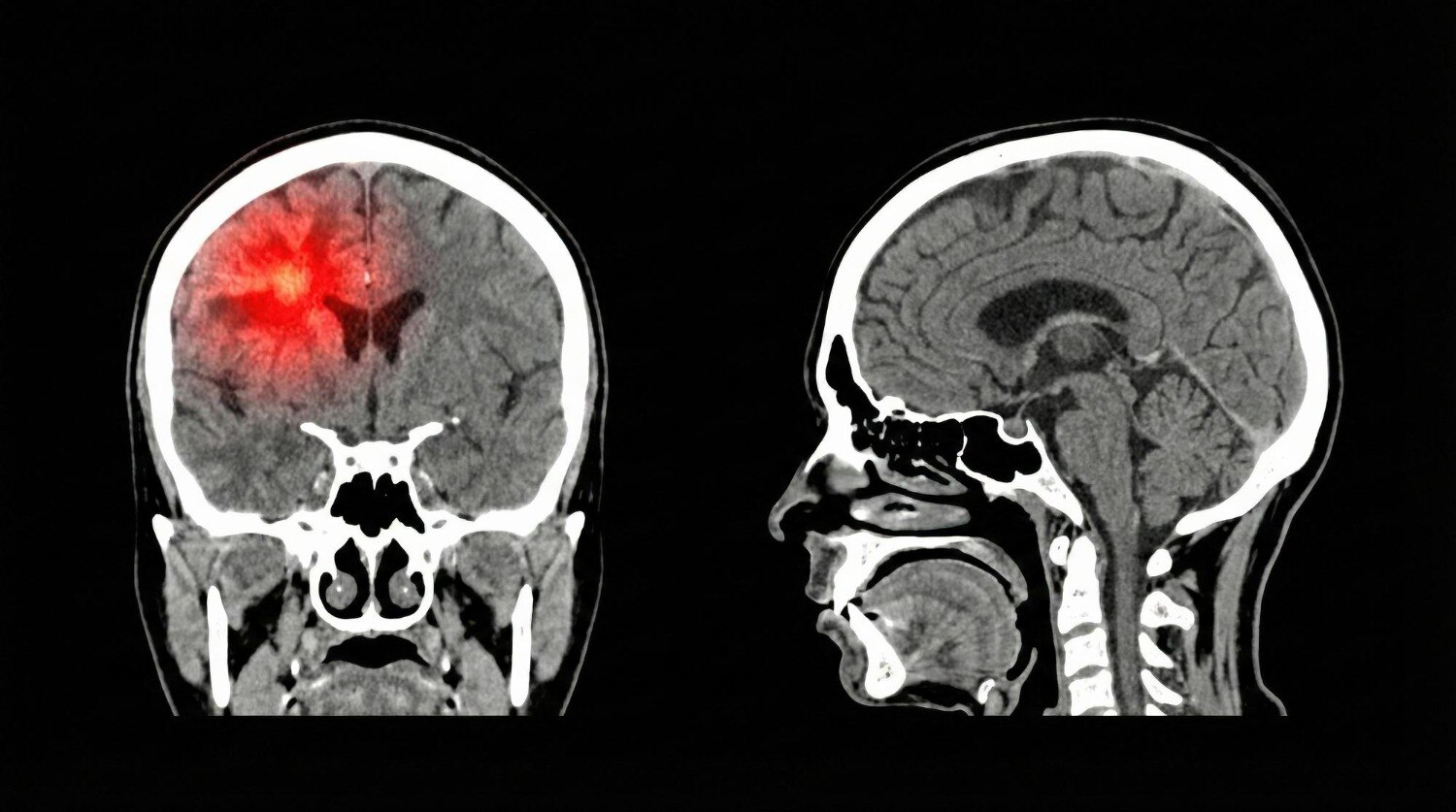
Follow-up for brain tumor surgery complications bandra should include postoperative observations, wound checks, medication review and brain imaging. Ask how the scan compares with the preoperative images and whether pathology changes the plan. Review steroids because the dose may need adjustment as swelling settles.
Discuss seizure treatment after any seizure; preventive anti-seizure medicine is not automatically continued long term in every patient who has never had one. Also confirm the next imaging date and pathology review.
What problems can follow surgery for a benign brain tumor?
Benign does not mean risk-free. A tumor near speech or movement areas, ventricles, pituitary, cranial nerves, major veins or arteries, or the brainstem can cause lasting harm even when its cells are not cancerous. Temporary swelling, seizures, bleeding, reduced blood flow or direct injury can produce weakness, language loss, vision changes or endocrine problems.
Problems after surgery can include:
- Incomplete removal because the tumor is firmly attached to a vessel, nerve or brainstem
- Recurrence of residual or regrown tumor
- Seizures
- Cerebrospinal-fluid leak or hydrocephalus
- Wound or deep infection
- Postoperative bleeding or brain swelling
- Venous thrombosis or pulmonary embolism
- Stroke
- Lasting neurological deficits, including weakness, speech difficulty, numbness or visual loss
- Lasting endocrine deficits after pituitary or nearby surgery
Leaving adherent tumor behind can prevent unacceptable damage; subtotal resection is not automatically a failure. It does require a documented plan.
Obtain the pathology report and operative note. Ask whether the next step is observation, another treatment or scheduled MRI surveillance. Follow-up differs for a completely removed meningioma, residual meningioma and other benign tumors, so pathology and operative extent matter more than location.
“Benign brain tumor surgery problems bandra” is a location-based search phrase, not a diagnosis; Bandra does not create a separate risk category.
Why can malignant-tumor problems continue after surgery and other treatment?
Malignant-tumor care usually combines surgery with radiotherapy, chemotherapy, targeted treatment or a clinical trial. Pathology and molecular testing guide that choice; visible tissue on a postoperative scan does not prove that every malignant cell was removed.
Residual or recurrent tumor can cause seizures, fatigue, cognitive or mood changes, hormonal deficiencies, hearing or vision problems, and neuropathy.
Contrast enhancement on an early or later MRI does not by itself prove recurrence. Several causes can look alike:
| Cause | Why it appears | How clinicians investigate |
|---|---|---|
| Postoperative change | Healing tissue enhances after surgery | Compare serial MRI scans |
| Pseudoprogression | Treatment temporarily increases enhancement and swelling | Review timing, symptoms and follow-up scans |
| Radiation necrosis | Delayed tissue injury after radiotherapy | Use advanced imaging or, when necessary, tissue sampling |
| Residual or recurrent tumor | Malignant cells remain or grow again | Combine imaging with pathology, molecular results and clinical change |
Radiation necrosis can arise months or years after radiotherapy. Management may involve observation, corticosteroids for swelling, selected anti-VEGF treatment or surgery, depending on symptoms and diagnostic certainty. Treatment timing matters: radiotherapy, drug therapy, steroid changes and imaging must be coordinated so one effect is not mistaken for another.
A search for “malignant brain tumor surgery problems bandra” describes a location-based concern, not a diagnosis; tumor biology, treatment history and scan progression determine the next step.
What should your follow-up plan include after brain tumor surgery?
Use this checklist before a same-day call or clinic review:
1. Record when the symptom began, whether it is worsening, and what function changed. For a seizure, note its start time, duration, movements, awareness, recovery, tongue injury and missed medication. Record your temperature and describe the wound: redness, swelling, separation, drainage or clear fluid.
2. Prepare every medication name and dose, including the current steroid dose, taper schedule, anti-seizure treatment, pain medicines and any missed doses. Do not change steroids or anti-seizure drugs without advice.
3. Bring the pathology report, molecular results, operative note and the surgeon’s description of tumor removal: complete, subtotal or biopsy only. These documents explain more than symptoms alone.
4. Confirm the next scan’s date and type, such as contrast-enhanced MRI, and ask what change requires an earlier scan. MRI intervals are not interchangeable: a completely removed benign meningioma, residual meningioma, high-grade glioma and metastasis follow different schedules based on pathology, residual disease, grade and prior radiation or chemotherapy.
5. If function remains limited, request physiotherapy for movement and balance, occupational therapy for daily tasks, speech-language therapy for language or swallowing, and neuropsychology for cognition. Add driving and seizure counseling before returning to the road.
A neurosurgical team in Mumbai, including Dr. Anshu Warade, can review the operative record, imaging and pathology together instead of judging a complication from symptoms alone. Leave with documented emergency contacts, imaging dates, medication review, rehabilitation referrals and long-term surveillance.
Related services
Brain (Cranial) Surgeries 🧠 Brain (Cranial) Surgeries by Dr. Anshu Warade Brain (Cranial) Surgeries involve advanced surgical procedures to treat conditions affecting the... View service → |
Skull Base Neurosurgery 🧠 Skull Base Neurosurgery by Dr. Anshu Warade Skull Base Neurosurgery is a highly specialized field that focuses on treating complex tumors and... View service → |
Frequently asked questions
Which symptoms are expected after brain tumor surgery, and which are emergencies?
Mild headache, wound pain, nausea, fatigue, poor sleep, mood changes, and scalp numbness can occur during early healing. Seek urgent care for a seizure, worsening drowsiness, new weakness, trouble speaking, severe headache with vomiting, fever with wound drainage, or sudden confusion.
What neurological complications can affect daily life after surgery?
Weakness, balance problems, speech or language difficulty, vision changes, memory problems, seizures, swallowing difficulty, and personality or mood changes can affect work, walking, driving, and self-care. Rehabilitation and medication review can address many of these problems.
What problems can follow surgery for a benign brain tumor?
Recovery can involve seizures, brain swelling, cerebrospinal-fluid leakage, infection, nerve-related deficits, hormone problems, or tumor regrowth. A benign diagnosis does not remove the need for scheduled imaging and neurological review.
Why can malignant-tumor problems continue after surgery and other treatment?
Malignant tumors can recur, leave microscopic disease, or cause symptoms through swelling and treatment effects. Follow-up may combine MRI scans, oncology care, seizure treatment, steroids when prescribed, rehabilitation, and supportive care.
What should your follow-up plan include after brain tumor surgery?
Confirm the pathology report, MRI schedule, wound review, medication plan, seizure precautions, rehabilitation needs, return-to-work guidance, and symptoms that require urgent contact. Keep copies of scan reports and pathology results for every specialist.
Related services
Neurological Examination 🧠 Neurological Examination by Dr. Anshu Warade A Neurological Examination is a detailed clinical assessment used to evaluate the functioning of the... View service → |
Endoscopic Brain Surgery 🧠 Endoscopic Brain Surgery by Dr. Anshu Warade Endoscopic Brain Surgery is an advanced, minimally invasive neurosurgical technique that uses a thin... View service → |
Keywords