Persistent back pain or leg pain can significantly restrict mobility, work, sleep, and daily activities. Yet only a proportion of people with spinal problems require surgery. When an operation becomes appropriate, Endoscopic Spine Surgery may be considered for selected conditions where a targeted minimally invasive approach can address the source of nerve compression.
For patients in Mahim, the key question is not whether endoscopic surgery is newer, but whether it is suitable for the actual spinal problem.
Why Back Pain Does Not Automatically Mean Surgery
Back pain can arise from muscles, joints, discs, nerves, posture-related strain, degeneration, or other conditions.
Many cases improve with non-surgical treatment.
Depending on the diagnosis, initial management may include medication, physiotherapy, activity modification, and other conservative measures.
Surgical evaluation becomes more relevant when there is persistent nerve compression, significant neurological symptoms, or inadequate improvement despite appropriate treatment.
What Does Endoscopic Spine Surgery Involve?
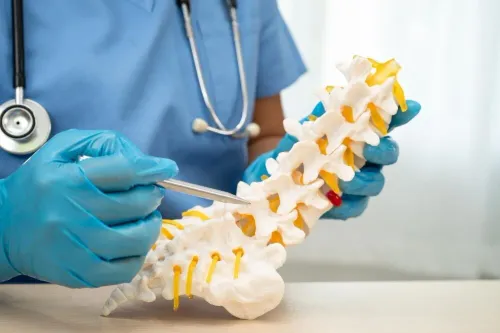
Endoscopic spine procedures use a small camera and specialised instruments to access selected areas of the spine through a limited surgical pathway.
The technique may be used in appropriately selected cases to address specific causes of nerve compression.
However, not every disc problem or spinal disorder can be treated endoscopically.
Symptoms That May Lead to Surgical Assessment
A patient may need further evaluation when back or neck symptoms are accompanied by:
- Persistent radiating leg or arm pain
- Numbness
- Tingling
- Muscle weakness
- Difficulty walking
- Progressive neurological changes
- Symptoms that remain significant despite conservative treatment
Certain changes in bladder or bowel control associated with neurological symptoms require urgent medical evaluation.
Imaging Must Match the Symptoms
MRI findings are important, but treatment should not be based on an abnormal scan alone.
Many adults have age-related changes on spinal imaging without significant symptoms.
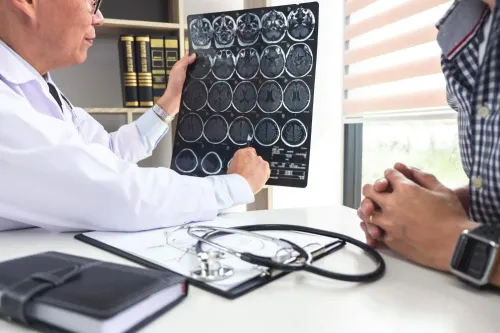
Dr. Anshu Warade evaluates whether the patient's symptoms, neurological examination, and imaging findings correspond before considering Endoscopic Spine Surgery.
This helps determine whether the abnormality seen on a scan actually explains the patient's problem.
Endoscopic and Conventional Surgery Have Different Roles
Endoscopic techniques can provide targeted access in suitable cases, but conventional surgery remains appropriate for many spinal conditions.
Complex instability, extensive compression, deformity, or other structural problems may require a different surgical strategy.
The objective should therefore be choosing the approach that adequately addresses the condition rather than selecting a procedure based only on incision size.
For patients in Mahim and surrounding areas of Mumbai, Maharashtra, accessibility for follow-up can also be useful because recovery may involve wound assessment, neurological review, physiotherapy, and activity guidance.
A detailed consultation with Dr. Anshu Warade can help determine whether surgery is necessary and whether an endoscopic approach is technically appropriate. Patient selection remains one of the most important factors in achieving a well-planned spine treatment pathway.