A booking enquiry for endoscopic brain surgery in Dadar starts with a specialist consultation, not an operation date. You will know which records to send, how the surgeon decides whether an endoscopic route fits, where the operation will take place and which hospital, anaesthesia and follow-up details to confirm.
Key takeaways
- Book a specialist consultation before choosing an operation date.
- Ask whether an endoscopic route fits your diagnosis and anatomy.
- Bring MRI or CT images, reports, medication details and previous treatment records.
- Confirm the hospital, surgical route and backup plan before booking.
Start with a specialist consultation, not a theatre booking
Call or message the neurosurgical clinic and ask for a consultation with the named surgeon, not an operation date. State whether you have a new symptom, an MRI finding, a second-opinion request or a recommended operation. Give your diagnosis, symptoms, previous brain, sinus or pituitary treatment, and the reports already available.
1. Provide your name, contact details, age, main concern and available MRI or CT reports. The clinic will collect these basics and arrange the first appointment after reviewing the records it receives.
2. Ask who will review the actual scans, whether the consultation is in Dadar or another Mumbai location, and whether it will be in person or remote. Take the DICOM disc or secure image link if you attend.
3. Confirm that a clinic appointment does not reserve a hospital bed, anaesthetist or theatre slot. Hospital admission and operating-room scheduling come only after the surgeon assesses the diagnosis, route and need for surgery.
When comparing providers for endoscopic brain surgery for dadar, check recognised medical registration, neurosurgical training, endoscopic or skull-base experience, emergency cover and the named operating hospital. A search for brain surgeon dadar helps with travel and access; it does not prove suitability, expertise or a safe surgical plan. Ask who will provide follow-up after discharge.
Find out whether an endoscopic route fits the diagnosis
The diagnosis, not the word endoscopic, determines whether this route fits. A search for “minimally invasive brain surgery dadar” describes access and location, not a suitable operation. The surgeon must assess the lesion’s position, size, blood-vessel relationships, bone and sinus anatomy, symptoms and available alternatives.
| Route | How access is made | Conditions that may fit |
|---|---|---|
| Endoscopic endonasal | Through the nose and sinuses | Selected pituitary, sellar, skull-base, and nasal-skull-base lesions |
| Endoscopic ventricular | Through a burr hole with an endoscope | Selected hydrocephalus and intraventricular problems |
| Endoscope-assisted craniotomy | Small craniotomy plus direct access | Lesions where open exposure provides better control than an endonasal or ventricular route |
Ask whether the proposed operation is diagnostic, decompressive or intended to remove the lesion. Observation with interval MRI, medication, biopsy, radiation, radiosurgery and open microsurgery may offer a better balance of benefit and risk. Endoscopic neurosurgery in mumbai is not automatically safer because the skin opening is smaller.
Discuss these reasons for choosing another approach:
- The lesion cannot be reached safely through the proposed route.
- Disease is extensive or involves structures that need wider exposure.
- Bleeding risk makes limited endoscopic control unsuitable.
- Bone or sinus anatomy blocks a safe endonasal path.
- Open cranial surgery offers better visibility and control.
Before booking, ask what would make the surgeon change approach during the operation and whether additional treatment could be needed. The route should match the anatomy and objective, not the appeal of a minimally invasive label.
Prepare the records the surgeon needs before deciding
Bring the actual scans and complete treatment records to the first appointment; the written report alone cannot show every detail needed for surgical planning. Whether you searched brain surgeon Dadar or endoscopic brain surgery for Dadar, carry or send:
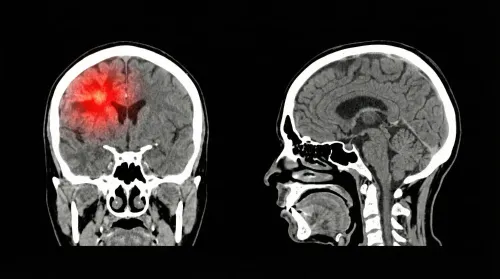
1. The contrast-enhanced MRI brain, its DICOM disc or secure download link, and the written radiology report. Direct image review can reveal vascular anatomy, bone involvement, sinus structure and the lesion’s relationship to critical brain structures.
2. CT scans of the skull or sinuses, if available, plus pathology reports, previous operation notes, discharge summaries and records of radiation or other treatment.
3. A complete medication list with doses, including aspirin, anticoagulants, antiplatelet drugs, steroids, diabetes medicines and supplements.
4. A written record of allergies, diabetes, hypertension, kidney disease, sleep apnoea, pregnancy possibility and prior sinus surgery.
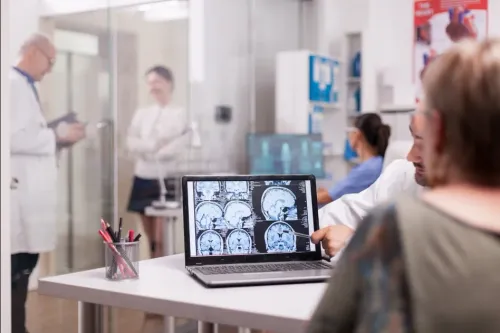
The consultation includes a neurological examination, direct review of the MRI or CT images, discussion of the diagnosis and alternatives, and an assessment of surgical risk. A booking office cannot reliably confirm every required test before this review.
Depending on the diagnosis, planning may require thin-slice skull-base or sinus CT, vascular imaging, endocrine tests, visual-field testing or angiography. These tests help define anatomy, hormone function, blood-vessel risk and vision.
Do not stop aspirin, anticoagulants or any other medicine without instructions from the treating team. Stopping treatment independently can create avoidable harm.
Confirm the hospital, route and backup plan before booking
Before paying a surgical deposit, confirm the exact operating hospital, admitting consultant and whether the proposed booking includes a hospital bed, anaesthesia assessment and theatre date. A consultation for minimally invasive brain surgery Dadar is separate from hospital admission; it does not reserve an anaesthetist or operating slot.
1. Ask which route is planned: endonasal through the nose, ventricular through a burr hole, or endoscope-assisted craniotomy. Why does that route fit the lesion’s location, size, blood-vessel relationships and anatomy? Is the aim diagnostic, decompressive or complete removal, and could biopsy or open surgery still be needed?
2. For an endonasal operation, ask whether nasal or skull-base reconstruction is planned and how the team detects and repairs a cerebrospinal-fluid leak. Clarify what happens if bleeding, poor visibility or unexpected anatomy requires a different approach.
3. Get written details of expected admission, discharge, pathology handling and every postoperative appointment. Ask who provides emergency cover after discharge and whether follow-up includes nasal cleaning, vision checks, sodium, cortisol, thyroid and other hormone tests.
4. Read consent for route-specific risks: bleeding, infection, CSF leak, meningitis, visual injury, pituitary or hormonal dysfunction, diabetes insipidus, smell loss, sinus problems, conversion to another approach and additional treatment.
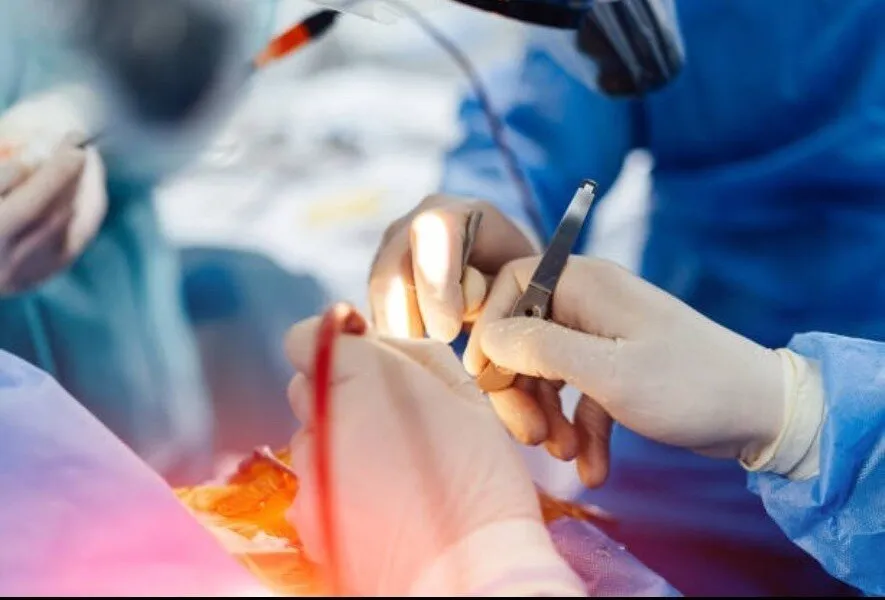
Endoscopic neurosurgery in Mumbai remains surgery, not simply a smaller incision. “Minimally invasive” does not remove the need for reconstruction, monitoring or a clear backup plan.
Use the consultation to choose a local care pathway
A Dadar consultation does not automatically mean the operation will occur in Dadar. A search for endoscopic brain surgery for Dadar may lead to a Mumbai hospital with the required operating theatre, anaesthesia service, intensive-care unit and emergency backup.
Ask where the operation will take place, who the admitting consultant is, and whether the same team provides inpatient and postoperative care.
| Arrangement | What it means | Confirm before booking |
|---|---|---|
| Dadar consultation, Mumbai operation | Assessment occurs locally; surgery occurs at the hospital selected by the surgeon | Hospital name, admission plan and travel arrangements |
| Same team throughout | The operating team reviews you before admission and after discharge | Postoperative clinic, emergency contact and pathology responsibility |
| Different follow-up providers | Another doctor or hospital manages recovery | Who reviews results, removes dressings and handles complications |
Dr. Anshu Warade can help assess the diagnosis, surgical route and alternatives when you need specialist review. For a brain surgeon Dadar appointment, settle the recovery plan in writing, including nasal cleaning or debridement, pathology review, and the timing of MRI, vision, sodium, cortisol, thyroid and other hormone checks.
Before discharge, obtain written instructions to contact the hospital urgently or seek emergency care for:
- Worsening headache, fever or neck stiffness
- Confusion, weakness, seizure or declining vision
- Persistent clear nasal drainage or repeated vomiting
- Marked thirst with excessive urination
Related services
Endoscopic Brain Surgery 🧠 Endoscopic Brain Surgery by Dr. Anshu Warade Endoscopic Brain Surgery is an advanced, minimally invasive neurosurgical technique that uses a thin... View service → |
Brain (Cranial) Surgeries 🧠 Brain (Cranial) Surgeries by Dr. Anshu Warade Brain (Cranial) Surgeries involve advanced surgical procedures to treat conditions affecting the... View service → |
Frequently asked questions
Should I book an operation date before seeing a neurosurgeon?
No. Start with a specialist consultation. Tell the clinic whether you have new symptoms, an MRI finding, a second-opinion request or a recommended operation.
Is endoscopic brain surgery suitable for every diagnosis?
No. The surgeon must assess your diagnosis, imaging and anatomy before deciding whether an endoscopic route is appropriate.
What records should I bring to the consultation?
Bring MRI or CT images, written reports, symptom details, medication information and records of previous brain, sinus or pituitary treatment.
What should I confirm before booking surgery?
Confirm the hospital, surgical route, expected recovery arrangements and the backup plan if the endoscopic approach is unsuitable or needs to change.
Related services
Skull Base Neurosurgery 🧠 Skull Base Neurosurgery by Dr. Anshu Warade Skull Base Neurosurgery is a highly specialized field that focuses on treating complex tumors and... View service → |
Neurological Examination 🧠 Neurological Examination by Dr. Anshu Warade A Neurological Examination is a detailed clinical assessment used to evaluate the functioning of the... View service → |
Keywords