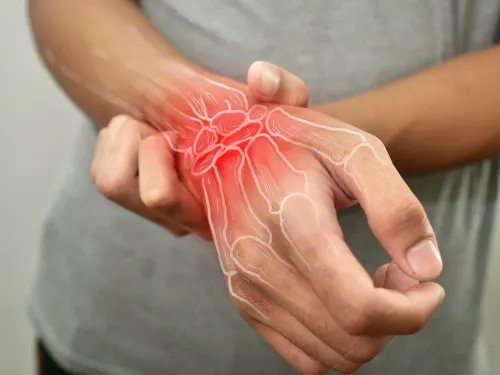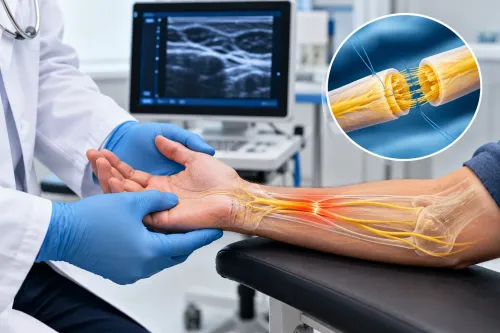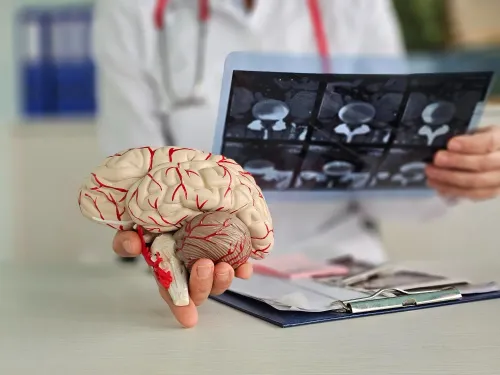
Nerve symptoms after an accident do not automatically mean that the brain is injured or that brain surgery is the right treatment. The correct operation depends on whether the problem lies in the brain, a cranial nerve, spinal cord or nerve root, brachial plexus, or a peripheral nerve in the arm or leg; the sections below show how to identify that distinction and act on it.
Key takeaways
- Most arm, hand and leg nerve injuries do not need brain surgery.
- MRI, nerve-conduction studies and examination help locate and grade damage.
- Nerve repair, grafting, transfer or decompression depends on the injured structure.
- Seek urgent assessment for worsening weakness, loss of sensation or severe trauma.
Which nerve injuries can brain or skull-base surgery treat?
Most arm, hand and leg nerve injuries are not treated with brain surgery.
A brain injury damages brain tissue; a cranial-nerve injury affects one of the 12 nerve pairs leaving the brain to control functions such as vision, facial movement, hearing, swallowing and speech; a peripheral-nerve injury affects nerves outside the brain and spinal cord, such as the median, ulnar or sciatic nerve.
| Structure | Typical problem | Surgery that may fit |
|---|---|---|
| Brain | Tumour, haematoma or vascular lesion affecting brain tissue or nearby pathways | Brain surgery or lesion treatment |
| Cranial nerve | Compression by a tumour, bone fragment, haematoma, vascular lesion or scar at the skull base | Skull-base decompression or lesion removal |
| Nerve root or spinal cord | Compression or damage from a disc, fracture, tumour or scar | Spinal decompression or stabilisation |
| Peripheral nerve | Stretching, entrapment, scar or transection in an arm, hand or leg | Peripheral-nerve repair, grafting, neurolysis or nerve transfer |
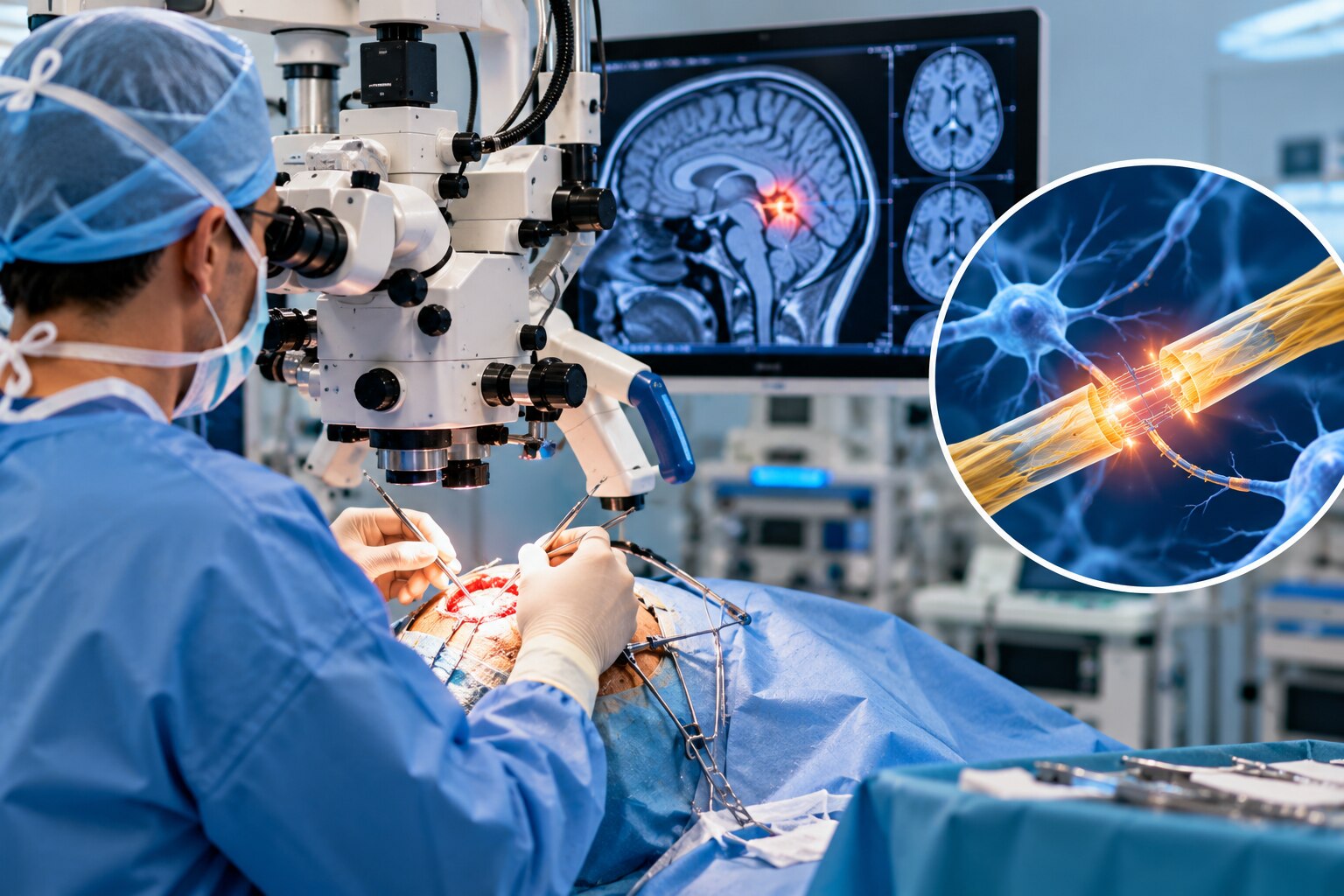
A severed peripheral nerve cannot be reconnected through brain surgery. Brain or skull-base surgery becomes relevant when a lesion affects the brain, spinal cord, nerve root or cranial nerve, rather than the limb nerve itself.
The practical question—when can brain for surgery help nerve injuries in mumbai—must begin with anatomy and mechanism: identify what is damaged and whether it is compressed, bruised, stretched, trapped, pulled from its attachment or cut. Name the operation only after that finding.
How do doctors locate and grade the nerve injury?
Doctors locate and grade a nerve injury by matching the examination to the exact timing and mechanism: laceration, traction, compression, fracture, tumour or blunt impact. They map each muscle’s strength, skin sensation and reflexes, then record autonomic changes such as abnormal sweating, temperature or colour, alongside pain, numbness and whether weakness is progressing.
- Record facial weakness, double vision, hearing change, swallowing difficulty and speech change during a cranial-nerve examination.
- Compare both sides and document strength using a standard 0–5 scale, sensory boundaries, reflex asymmetry and functional loss.
- Repeat the examination to show recovery, stability or deterioration rather than relying on one appointment.
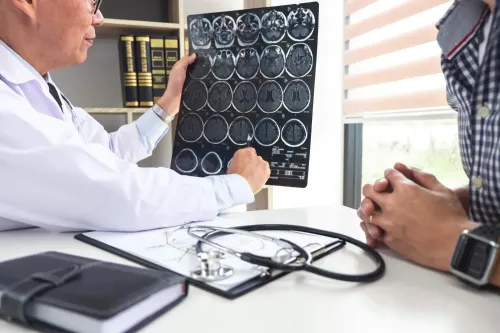
Imaging follows the suspected location. CT shows fractures, bone fragments, acute bleeding and bony compression; MRI assesses the brain, spinal cord, roots and skull base. Ultrasound can show a superficial nerve’s continuity, swelling or scar, while MR neurography maps deeper nerve enlargement, entrapment or discontinuity.
Nerve-conduction studies measure signal transmission, and needle electromyography detects evolving denervation and muscle reinnervation. A normal early study does not exclude a recent injury: Wallerian degeneration and denervation take time, so clinicians interpret results with serial examinations and repeat testing.
A bruised or stretched, continuous nerve may recover with observation and physiotherapy. A cut, pulled-away, densely trapped or progressively deteriorating nerve has a poorer spontaneous outlook and may need intervention. This is the core of complex nerve injury treatment in Mumbai: grade the structure and mechanism before choosing treatment.
Which operation fits the injured structure, and when does timing matter?
The operation depends on the damaged structure and mechanism, not simply on the surgeon’s specialty. Decompression suits a compressed nerve root, spinal cord or cranial nerve; a severed arm or leg nerve needs reconstruction instead.
| Option | What it means | When it applies |
|---|---|---|
| Decompression | Removes pressure from the nerve | Compression of a nerve root, spinal cord or cranial nerve |
| Direct repair | Joins the two nerve ends | A clean transection with ends that meet without tension |
| Nerve graft | Bridges a gap with donor nerve tissue | The nerve ends cannot be joined directly |
| Neurolysis | Frees a nerve from dense scar | Scar entrapment is restricting nerve function |
| Nerve transfer | Connects a working donor nerve to the damaged target | The original nerve cannot be repaired |
| Brachial-plexus reconstruction | Uses grafts, transfers or both | Injury affects the network supplying the shoulder and arm |
A suitable cleanly divided nerve may be repaired early when the wound and patient permit it. Prolonged denervation reduces the chance of useful muscle reactivation, so persistent tingling or partial movement is not a reason to postpone assessment.
A nerve transfer does not restore movement immediately: axons must grow into the target, followed by months of motor retraining and rehabilitation. Choose nerve injury surgery in Mumbai by anatomy and injury mechanism. The same principle guides complex nerve injury treatment in Mumbai.
When is urgent assessment safer than waiting or treating pain?
After trauma, seek urgent assessment rather than waiting if weakness is rapidly worsening, the face droops, double vision develops, speech is lost, swallowing becomes difficult, numbness worsens, or severe headache, repeated vomiting or reduced alertness follows a head injury.
- Loss of bladder or bowel control can signal spinal-cord or cauda-equina compression.
- Saddle numbness—loss of sensation around the groin, buttocks or inner thighs—needs emergency evaluation.
- Severe neck or back pain with weakness, numbness or difficulty walking can indicate a spinal emergency.
Pain alone does not prove a repairable nerve injury. Neuropathic pain can come from a neuroma, compression, ongoing nerve damage or central sensitisation, and operating without identifying the cause can injure the wrong anatomical structure.
| Option | Best fit | Main limitation |
|---|---|---|
| Surgery | A cut, trapped or progressively failing nerve, or proven compression | Repair does not restore function immediately; reinnervation and retraining take months |
| Observation and physiotherapy | Bruised or stretched nerve with stable function and signs of recovery | Delay can reduce recovery if the nerve is cut or remains compressed |
| Splinting, occupational therapy and sensory re-education | Protecting joints, preventing contractures and rebuilding useful movement or sensation | Requires consistent rehabilitation |
| Pain treatment | Pain without a demonstrated surgically correctable lesion | Controls symptoms but does not release a trapped or divided nerve |
A cut nerve can develop a gap and lose its target muscle; prolonged entrapment can cause permanent weakness. Progressive deficits demand prompt localisation before considering nerve damage surgery in Mumbai, because the correct treatment may be decompression, repair or continued rehabilitation.
What should you ask before choosing nerve injury care in Mumbai?
Ask these questions before choosing nerve injury care: What exact structure is injured—nerve root, spinal cord, cranial nerve, brachial plexus, peripheral nerve, or tendon? Is the nerve continuous, stretched, trapped, scarred, or completely divided? Which examination, MRI, CT, ultrasound, MR neurography, electromyography, or nerve-conduction finding proves that conclusion?
For a neurosurgeon nerve injury in Mumbai consultation, request a clear plan rather than the label “brain surgery”:
- Is the proposed operation brain, skull-base, spinal, peripheral-nerve, or tendon surgery?
- Would decompression, direct repair, grafting, nerve transfer, neurolysis, or conservative care fit the injury?
- What recovery window is realistic, and when would delayed treatment reduce useful muscle reactivation?
- Who will provide physiotherapy, splinting, occupational therapy, sensory re-education, and motor retraining?
| Treatment choice | What it addresses | Typical fit |
|---|---|---|
| Decompression | Pressure on a root, cord, or cranial nerve | Compression from disc, scar, bone, tumour, or vessel |
| Repair or grafting | A divided nerve | Clean transection or a gap between nerve ends |
| Transfer or neurolysis | Unrepairable nerve or dense scar | Selected brachial-plexus injuries or entrapment |
| Conservative care | Bruised or stretched nerve with continuity | Stable weakness with signs of recovery |
A straightforward hand or limb laceration may suit a peripheral-nerve, hand, plastic, or orthopaedic reconstruction team. A nerve-root, spinal-cord, cranial-nerve, skull-base, or difficult brachial-plexus case may require neurosurgical expertise. When comparing nerve injury surgery in Mumbai, Dr. Anshu Warade can help clarify whether the anatomy and proposed operation match.
Related services
Brain (Cranial) Surgeries 🧠 Brain (Cranial) Surgeries by Dr. Anshu Warade Brain (Cranial) Surgeries involve advanced surgical procedures to treat conditions affecting the... View service → |
Skull Base Neurosurgery 🧠 Skull Base Neurosurgery by Dr. Anshu Warade Skull Base Neurosurgery is a highly specialized field that focuses on treating complex tumors and... View service → |
Frequently asked questions
Which nerve injuries can brain or skull-base surgery treat?
Specialist surgery can address selected skull-base, cranial-nerve and complex peripheral-nerve injuries, but most limb nerve injuries need peripheral-nerve or orthopaedic assessment rather than brain surgery.
How do doctors locate and grade a nerve injury?
Doctors combine a neurological examination with imaging, electromyography and nerve-conduction studies to identify the damaged nerve, injury level and remaining function.
When does timing matter for nerve injury surgery?
Timing depends on whether the nerve is compressed, bruised, cut or pulled away. A cut nerve needs prompt assessment, while prolonged denervation can reduce the chance of useful muscle recovery.
When is urgent assessment safer than waiting?
Seek urgent care after major trauma, an open wound, rapidly worsening weakness, new loss of sensation, severe pain with swelling, or symptoms suggesting spinal-cord or brain involvement.
What should you ask before choosing nerve injury care in Mumbai?
Ask which nerve and injury type are involved, which tests confirm it, whether surgery is time-sensitive, which operation is proposed, expected recovery, rehabilitation needs and the surgeon’s relevant experience.
Related service
Neurological Examination 🧠 Neurological Examination by Dr. Anshu Warade A Neurological Examination is a detailed clinical assessment used to evaluate the functioning of the... View service → |
Keywords